TL;DR: The video game industry is undergoing significant change in 2024-2025, with major studio consolidations, the rise of AI-generated content, subscription model growth, and a renewed focus on live-service games. These shifts are reshaping how games are made, sold, and played across every platform.
The gaming industry rarely sits still. New announcements, surprise acquisitions, and platform-defining releases seem to drop every other week, and keeping up can feel like a full-time job. But beneath the noise, a handful of genuinely significant shifts are redefining how games are developed, distributed, and experienced.
From Microsoft’s continued expansion of its gaming empire to the quiet but accelerating adoption of AI tools in game development studios, the landscape looks meaningfully different than it did even 18 months ago. Some of these changes will benefit players directly. Others will take years to fully play out. All of them are worth understanding.
This post breaks down the biggest gaming industry updates, covering studio news, business strategy pivots, what it all means for players, and where the industry appears to be heading next.
What Are the Biggest News Stories Shaking the Gaming Industry Right Now?
The most talked-about story of the past year remains Microsoft’s acquisition of Activision Blizzard, which officially closed in October 2023 for approximately $68.7 billion, making it the largest gaming acquisition in history (more details here). The deal brought franchises like Call of Duty, World of Warcraft, and Diablo under the Xbox umbrella, fundamentally altering the competitive dynamics between Microsoft, Sony, and Nintendo.
Sony, meanwhile, has responded by doubling down on exclusive first-party titles and its PlayStation Plus subscription tier, which reportedly surpassed 47 million subscribers as of mid-2024 (source). The subscription wars, long a defining feature of the streaming industry, have now arrived in full force at gaming’s door.
Nintendo continues to chart its own course. Rumors of a Nintendo Switch 2 have circulated for years, and recent supply chain and retail reports suggest a 2025 launch is increasingly likely (report). Nintendo has remained characteristically tight-lipped, but developer anticipation appears high.
What Have Major Game Studios Announced Recently?
Several studios have made announcements that are reshaping expectations for the next two to three years of gaming.
Xbox Game Studios and Bethesda
Following the Activision Blizzard acquisition, Microsoft reorganized its studio structure and, in a surprising move in early 2024, announced the closure of Arkane Austin (Redfall), Tango Gameworks (Hi-Fi Rush), Alpha Dog Studios, and Roundhouse Games (coverage). The closures drew widespread criticism given that Hi-Fi Rush had been widely praised by critics and players alike. Microsoft defended the restructuring as necessary to focus resources on its highest-priority projects.
On the brighter side, Bethesda’s The Elder Scrolls VI remains in pre-production, and Xbox has confirmed that future Activision titles, including Call of Duty, will continue releasing on PlayStation, partly as a condition of regulatory approval.
PlayStation Studios
Sony’s first-party lineup has been in transition. After the underwhelming commercial performance of Concord (which was pulled from shelves just two weeks after launch in 2024), Sony has signaled a more cautious approach to live-service game investments (analysis). Concord represented a significant financial loss, and Sony Interactive Entertainment CEO Hiroki Totoki acknowledged the failure publicly, noting the studio would “take a hard look” at its live-service strategy.
More positively, Astro Bot launched to near-universal acclaim in September 2024, winning numerous Game of the Year awards and reminding the industry that polished, creative single-player experiences still resonate deeply with audiences.
Independent and Mid-Tier Studios
Outside the major publishers, independent studios are thriving. Balatro, a poker-inspired roguelite by solo developer LocalThunk, became a breakout hit in 2024, selling over a million copies within its first week (review roundup). The success of Balatro reinforced a trend that has been building for years: players are just as hungry for original, well-crafted indie games as they are for blockbuster titles.
How Is the Industry’s Business Strategy Changing?
The structural shifts happening in gaming boardrooms are just as significant as any individual game release.
The Subscription Model Is Winning

Xbox Game Pass, PlayStation Plus, and Nintendo Switch Online have fundamentally changed how players access games. Game Pass in particular has become a core part of Microsoft’s identity; the service reportedly had over 34 million subscribers as of early 2024 (official update). The model incentivizes volume and retention over individual sales, which changes what types of games studios are motivated to build.
Critics argue this model devalues individual titles and makes long-term game preservation harder. Supporters say it democratizes access, particularly for players who can’t afford $70 launch-day prices. Both arguments have merit, and the tension between them will likely define industry debates for years to come.
AI Is Entering the Development Pipeline
Artificial intelligence tools are beginning to influence how games are made, not just played. Studios are experimenting with AI for tasks like NPC dialogue generation, procedural level design, and quality assurance testing. Ubisoft’s “Ghostwriter” tool, for example, assists writers by generating first-draft lines of NPC dialogue (Ubisoft blog).
The implications are significant. On one hand, AI tools can accelerate development timelines and reduce costs for smaller studios. On the other hand, concerns around job displacement, particularly for entry-level artists, writers, and testers, have prompted pushback from industry workers and unions. The Game Workers Alliance, which successfully unionized at Sega of America and ZeniMax, represents a growing movement pushing back against unchecked AI adoption.
Consolidation Continues
The Microsoft-Activision deal wasn’t an isolated event. Take-Two Interactive completed its $12.7 billion acquisition of Zynga in 2022, and Sony acquired Bungie for $3.6 billion that same year (deal overview). The broader trend is clear: large publishers are acquiring studios and IP at an accelerated pace, while mid-tier independent publishers are finding it increasingly difficult to compete for talent and shelf space.
How Are These Industry Updates Affecting Gamers Directly?

For players, these shifts translate into tangible changes in what games look and feel like, how they’re priced, and how long they last.
Higher base prices have become the new standard. $70 USD is now the typical launch price for AAA titles on PlayStation 5 and Xbox Series X, up from the $60 that held steady for over a decade (pricing trend). Publishers cite rising development costs; some AAA games now cost hundreds of millions of dollars to develop and market as justification for the increase.
Live-service games continue to dominate publisher roadmaps, which means more games built around seasonal content, battle passes, and microtransactions. Player reception to this model remains mixed. Games like Helldivers 2 have demonstrated that live-service titles can succeed when they deliver genuine fun and fair monetization. Others, like Skull and Bones and The Day Before, have stumbled badly.
Single-player, story-driven games are not disappearing, but they’re increasingly rare from the largest publishers. Studios like Naughty Dog, Santa Monica Studio, and CD Projekt Red continue to invest in narrative experiences, but the financial pressure to build games with recurring revenue streams is real and growing.
What Trends Are Going to Shape the Gaming Industry Next?
Looking ahead, several developments stand out as particularly likely to define gaming’s next chapter.
Cloud gaming is maturing, slowly. Xbox Cloud Gaming and NVIDIA GeForce Now are expanding their libraries and improving performance, but adoption remains niche (cloud gaming report). Latency issues and internet infrastructure gaps continue to limit the technology’s appeal outside major urban centers. The promise of playing any game on any device is compelling; the execution still needs work.
Handheld gaming is surging. The success of the Steam Deck, launched by Valve in 2022, validated a market that Nintendo had long dominated alone. Multiple competitors have since entered the space, including the ASUS ROG Ally and Lenovo Legion Go (comparison). If Nintendo does launch Switch 2 in 2025, it will enter a handheld market that is meaningfully more competitive than when the original Switch launched in 2017.
Generative AI in games is coming. Beyond development tools, AI is beginning to appear inside games themselves, most notably in dynamic NPC conversations. NVIDIA’s ACE technology enables real-time, AI-generated NPC dialogue (NVIDIA ACE), and several developers have announced plans to incorporate similar features.
The esports industry is recalibrating. After years of rapid growth followed by contraction, esports organizations are refocusing on sustainable revenue models. Several high-profile leagues, including the Overwatch League, have wound down their franchised city-based structures (esports shift). The industry is maturing, and with maturity comes a more realistic assessment of what esports can and can’t achieve commercially.
The Gaming Landscape Has Changed. Here’s How to Stay Ahead of It
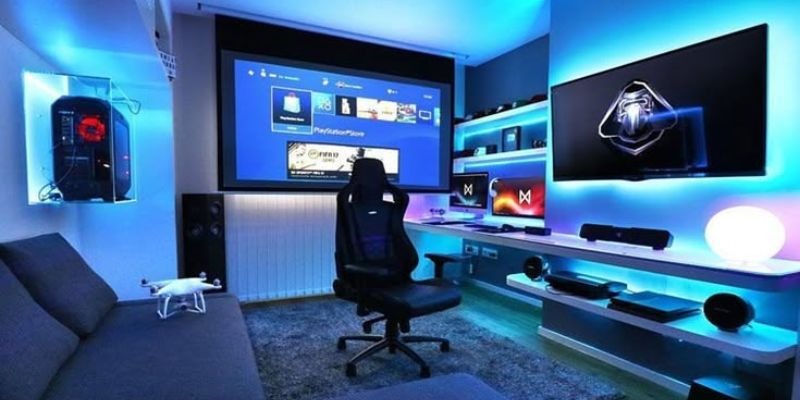
The video game industry is in the middle of a genuine transformation. gaming industry updates, AI integration, subscription-first distribution, and shifting player expectations are all colliding at once. Not all of these changes are bad; some are opening doors for independent developers and creating new ways for players to access great games. But the pace of change demands attention.
If you want to stay informed, the best approach is to follow a mix of industry news sources (IGN, Kotaku, Game Developer, and Bloomberg’s Jason Schreier), watch for quarterly earnings reports from major publishers, and pay attention to what developers, not just executives, are saying publicly about working conditions and creative priorities.
The games are still worth playing. The industry building them is worth watching closely.
Frequently Asked Questions About the Gaming Industry
What is the biggest change happening in the gaming industry right now?
The most significant structural shift is the ongoing consolidation of studios under major publishers, most notably Microsoft’s $68.7 billion acquisition of Activision Blizzard, which closed in October 2023. Combined with the rise of subscription services and AI-assisted development, these changes are fundamentally reshaping how games are made and distributed.
Is the gaming industry growing or shrinking?
The global gaming market continues to grow overall, though 2023 saw a slowdown compared to the pandemic-driven boom years of 2020–2021. Mobile gaming remains the largest segment by revenue, while console and PC gaming continue to recover. According to Newzoo, the global games market was valued at approximately $184 billion in 2023.
How is AI being used in video game development?
Studios are using AI tools for NPC dialogue generation, procedural content creation, quality assurance, and art asset production. Ubisoft’s “Ghostwriter” is one of the most publicly documented examples. AI is also beginning to appear inside games themselves, enabling more dynamic and responsive NPC behavior in real time.
Why are game studios closing despite the industry growing?
Studio closures often reflect misaligned expectations rather than industry-wide decline. Publishers invest heavily in games that underperform commercially, leading to restructuring. Microsoft’s 2024 closure of Tango Gameworks, despite Hi-Fi Rush receiving strong critical reviews, is a notable example of how commercial performance metrics can override critical success.
What is the future of handheld gaming?
Handheld gaming is expanding beyond Nintendo’s traditional dominance. The Steam Deck by Valve and devices like the ASUS ROG Ally have introduced PC-grade handheld gaming to a growing audience. A widely anticipated Nintendo Switch 2 launch in 2025 is expected to intensify competition in this segment significantly.